In-line inspection
Smart pigging for wall-loss, geometry and crack detection.
Midstream
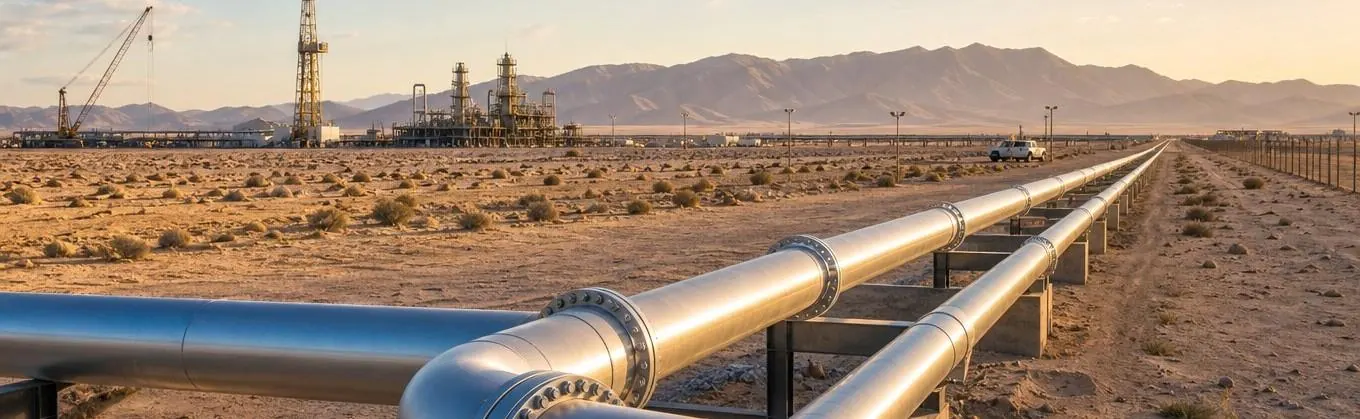
An end-to-end infrastructure profile covering conceptual routing, construction, monitoring, integrity, maintenance and rehabilitation.
Integrity methods
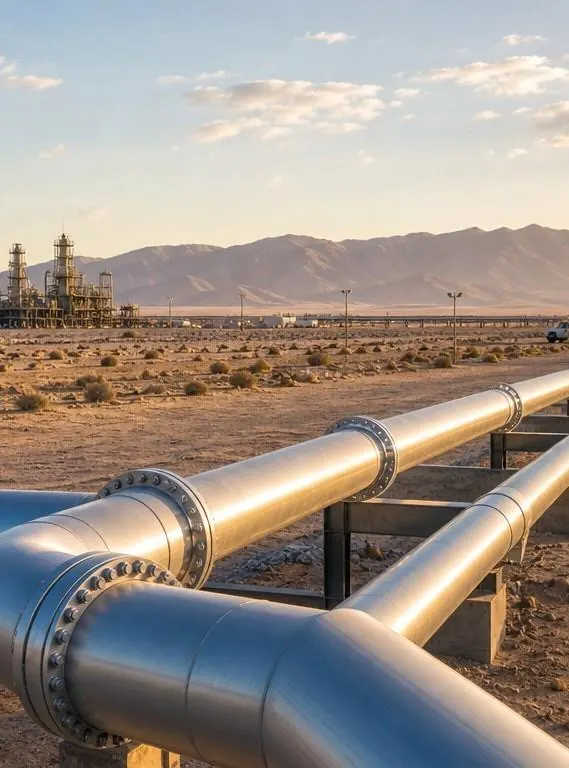
Smart pigging for wall-loss, geometry and crack detection.
External corrosion control on buried and submerged pipe.
Round-the-clock surveillance of pressure and flow continuity.
Governing framework
| Reference | Scope |
|---|---|
| API RP 1160 | 3rd edition. Managing System Integrity for Hazardous Liquid Pipelines, for systems transporting hazardous liquids as defined in 49 CFR 195.2. |
| 49 CFR §195.452 | Pipeline integrity management in high consequence areas for hazardous liquid pipelines. |
| 49 CFR Part 195 | Transportation of hazardous liquids by pipeline: the PHMSA regulatory framework. |
| ASME B31.4 / B31.8 | US design codes for liquid hydrocarbon pipelines and gas transmission systems respectively. |
| API RP 1173 | Pipeline Safety Management Systems: the approach incorporated into API 1160, 3rd edition. |
| API RP 1175 | Leak detection programme management. |
| API RP 1176 | Cracking management in pipelines. |
| API RP 1178 | Pipeline integrity data management. |
| API RP 1133 | Hydrotechnical hazards for pipelines. |
Sources: API Recommended Practice 1160 (3rd edition) · API standards announcement · PHMSA 49 CFR Part 195